

The Resource You Cant See, But That Powers Everything
Green hydrogen cannot be seen, smelled, stored in barrels, nor is it yet traded on the London Metal Exchange. But it moves more money, expectations, and power strategies than nearly any other emerging resource. It is, quite literally, the energy of the future. And not because governments say so, but because the planets mathematics demand it. To meet decarbonization targets by 2050, the world needs to replace more than 30 percent of current fossil fuels. No single source can do that alone. Only green hydrogen has the ability to store clean energy, transport renewables in liquid form, power heavy industrial processes, and serve as the basis for synthetic fuels used in aviation and maritime transport.
In other words, green hydrogen is the giant battery humanity needs to move beyond carbon. But unlike lithium or copper, its not extracted from the earthits manufactured. From water and renewable electricity. With technology, investment, and political will. And that changes everything. Because its not enough to possess the resourceyou have to know how to transform it. The countries that master the production and conversion chain of hydrogen will also dominate the economy of tomorrow. And that race has already begun.
The importance of green hydrogen for the future is absolute. It will not only replace dirty fuels, but completely reconfigure the planets energy chains. And those making the first moves are not poor countries. Germany, China, Japan, the United States, Norway, and South Korea are already investing billions of dollars in infrastructure, patents, and pilot plants. Theyre not waiting for the market to maturethey are designing it. They know that whoever controls hydrogen will control maritime transport, aviation, steelmaking, the chemical industry, and the energy corridors of the 21st century. Meanwhile, many countries in the Global South continue to wait for investments that may never arrive.
How Green Hydrogen Is Produced and Who Can Make It
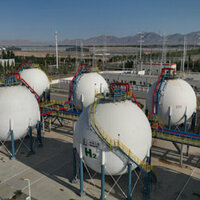
The process is simple in theory, complex in scale. Its called electrolysis. It involves taking water, applying electricity, and separating its molecules into hydrogen and oxygen. But not just any electricity. Only electricity from clean sources like solar or wind power is suitable. And not just any water. It must be treated, purified, and often desalinated if taken from the sea. The central equipment is the electrolyzera machine that can take up half a football field and consume tens of megawatts per hour.
For every ton of hydrogen produced, around 9,000 liters of treated water and about 50 to 55 MWh of renewable electricity are required. An industrial-scale plant can require
more than 1,000 tons of water per day, and operate with an installed capacity of 100 MW or more. Current production costs for green hydrogen range between USD 4 and USD 7 per kilogram, although they are expected to fall below USD 2 per kilogram by 2030, thanks to economies of scale and technological improvements.
The International Energy Agency estimates that around 180,000 tons of green hydrogen will be produced globally in 2024less than 1% of total global hydrogen production, which is dominated by the gray version (natural gas) with more than 90 million tons annually. In energy terms, this represents a marginal fraction, but with high growth potential.
In terms of installed capacity, the planet currently has 700 MW operational in electrolysis plants dedicated to green hydrogen. Projections suggest surpassing 134 GW by 2030, according to BloombergNEF data. Achieving that leap would require annual investments exceeding USD 150 billion over the next decade.
The leading countries today in green hydrogen capacity are:
- Chinaholds 33% of the global installed capacity.
- Germanyhas 15% (including projects under expansion).
- Australiaholds 12%, with operating plants and advanced permits.
- The United Stateshas 10%, but with strong future investment via federal subsidies.
- Chileholds 1%, with one pilot plant and 40 projects in the pipeline.
But true leadership does not lie in having the most plants, but in having the full value chain: production, storage, transportation, consumption, and exportation. Today, no country yet dominates this cycle independently. China advances with cross-subsidies. Germany with innovation. Australia with scale. Chile with wind. And the United States with its checkbook.
The challenge is not chemical, but political and infrastructural. Green hydrogen requires high initial investment, new distribution networks, safe storage, port logistics, and above all, a clear national strategy. Having wind is not enough. One must know who the production is for, who buys it, how much they pay, and who controls the entire cycle.
Countries that only sell the molecule without industrializing it will repeat the old extractive model. Green hydrogen may be clean, but it will not be fair if it only benefits the same companies as always.
The HIF Plant in Magallanes Is Chiles First Line
Chile has earned a place on the mapnot by chance, but thanks to its wind. In the Magallanes region, at the southernmost end of the south, rises the first pilot-scale green hydrogen project in Latin America:Haru Oni, developed by HIF Global, with participation fromPorsche,Siemens Energy, andEnel Green Power. The plant, located nearPunta Arenas, is already producing synthetic fuels from green hydrogen and CO captured from the air.
The first stage was inaugurated in 2022. It is a pilot plant with the capacity to produce750,000 liters of eFuels per year, equivalent to about2,050 liters per day. The electricity comes from awind farm with an installed capacity of 3.4 MW, powering aPEM-type Siemens electrolyzer, which produces the green hydrogen. That hydrogen is then combined with CO captured directly from the air usingDAC (Direct Air Capture)technology to generatesynthetic methanol, which is later converted intoclimate-neutral gasoline.
The estimated cost of this pilot production, according to sources at HIF and Porsche, isUSD 7 to 10 per literof eFuel, meaning the total annual value of this phase is aroundUSD 6 to 7 million. Although the cost is high, the goal is not yet to compete with fossil fuels but rather to validate the technology and open commercial routes. The fuel is already being shipped toGermanyfor testing inPorsche engines. It is sold in small batches aspremium synthetic fueland serves as a model for larger contracts in Europe.
But the real leap is thecommercial phase, which is already under development. The planned plant will have an estimated capacity of550 million liters per year, equivalent to producing1.5 million liters per dayenough to supply nearlyhalf a million vehicles annually. The estimated investment exceedsUSD 5 billion, and it is expected to be operational before2028.
If a target market price betweenUSD 2 and 3 per literis maintained (as unit costs decrease with scale), annual production could generate betweenUSD 1.1 and 1.65 billion, positioningChile as one of the worlds largest eFuel exporters. Target destinations includeGermany,Japan, and theUnited States, especially for hard-to-electrify sectors likemaritime and air transport, andhigh-end sports car fleets.
Commercialization is led byPorsche AG, which has already announced that all its internal combustion vehicles will continue operating with neutral fuels until2035.HIF Global, meanwhile, manages strategic alliances, environmental permits, and technological development, whileSiemensprovides the electrolysis systems. The model is aninternational private capital partnershipwith an export-oriented vision.
The plant includes anelectrical substation, adesalination unit, ahydrogen compression and storage system, amethanol synthesis plant, and asynthetic gasoline conversion unit. All of this is being built in one of the most extreme climates in the worldbut also one of the most favorable for this type of energy.
Today, HIF is asymbol. But ifChile does not replicate, regulate, and capture the value, it will once again follow the copper playbook: exporting raw wealth and buying back technology at a premium. The Magallanes plant is not the endit is thestarting point. And Chiles energy story is to be written based on what happens next.
Australia: A Wind Power Giant Without a National Industry
Australia is currently the worlds largest lithium producer and one of the leaders in green hydrogen developmentbut without a strategic national industry. Its role in the new energy map is the same as always: providing raw materials with no added value. It produces, exports, but does not dominate.
In the green hydrogen sector, Australia hasover 90 projects in the pipeline, abouttwentyof which are already under construction or in advanced permitting stages. The total projected capacity exceeds70 GW by 2030, with estimated investments of overUSD 200 billion, according to the official report from theAustralian Renewable Energy Agency (ARENA).
The main development regions arePilbara (Western Australia),Gladstone (Queensland), andTasmania, where solar resources, coastal winds, and proximity to export ports converge. The most advanced plants include:
- Asian Renewable Energy Hub (AREH):A megaproject in Pilbara of26 GW, aiming to produce green hydrogen and ammonia for export to Asia, with an estimated investment ofUSD 35 billion.
- Gladstone Hydrogen Project:Developed bySumitomoandStanwell, aiming to produce200,000 tons of hydrogen annuallyequivalent to over1 billion liters of eFuelwith projected annual revenues ofUSD 1.8 billion.
- Tasmania Green Hydrogen Hub:Focused onhydroelectric and wind power, with an initial investment ofUSD 700 million, led byFortescue Future Industries (FFI).
Despite the scale and investment, over90% of Australian hydrogenis oriented towardexport in the form of ammonia. There is no clear strategy for domestic use or industrialization. The model remains the same as with gas or lithium: export the resource, charge by the ton, and leave the industry in foreign hands.
China and Japanare the main potential clients. Companies such asJERA, Mitsubishi, Sinopec, andPetroChinahave signed memorandums of understanding to secure long-term purchases. Australia guaranteesvolume, political stability, and functional ports. But it hasno domestic electrolysis technology, nostate-owned companies, andno local eFuel refining. The entire value chain is in foreign hands.
Theproduction costof green hydrogen in Australia ranges fromUSD 2.5 to 4 per kilogram, depending on the energy source used. But since most of it is exported as ammonia, the country receives anintermediate valueandloses control over final uses. If Germany refines and Japan consumes,Australia merely extracts.
It has the wind. It has the sun. It has the water. But itlacks an industrial strategy. And in the 21st century, thats calleddependency disguised as power.
Germany: Engineering, Green Methanol, and European Leadership
Germany has no lithium, no deserts, and no extreme winds. But it has something even more decisive:engineering, planning, and technological sovereignty. Instead of betting on large volumes of extraction, it bet on masteringconversion, the chemical industry, and synthetic fuels. And its succeeding.
Today,Germany leads eFuel production in Europeand sets the standard for high-efficiency green hydrogen projects. Its focus is not on exporting raw hydrogen, but onrefining it and converting it into green methanol, synthetic gasoline, or kerosene. Thats where the added value lies. Thats where the power is.
One of the most symbolic cases is theHaru Oni plant, located inChilebut largelydesigned and financed by Germany. The methanol produced inMagallanesis shipped directly toEuropean portsto be used byPorsche, Bosch, Volkswagen, and other firms working on the transition tocarbon-neutral engines. Germany doesnt need tohavethe hydrogen. It needs tocontrolit.
Within its own territory, the most advanced plant is inLeuna (Saxony-Anhalt), operated bySunfire GmbH, in partnership withTotalEnergiesandSiemens Energy. This plant usessolid oxide electrolyzers (SOEC)cutting-edge German technologyand producesover 3,000 tons of green hydrogen annually, equivalent to about30 million liters of eFuel.
Theestimated commercial valueof that production exceedsUSD 75 million per year, and the goal is todouble capacity by 2026. Another key facility is located inSchleswig-Holstein, operating withoffshore wind energyand dedicated to producingsynthetic kerosene for aviation, with a capacity of up to8,000 tons annuallymore than90 million liters of clean jet fuel.
Thetotal investmentby the German state in green hydrogen and synthetic fuelsexceeds USD 9 billion between 2020 and 2024, and the national plan foreseesanother USD 18 billionthrough2030. The federal government has createdcross-subsidies, tax incentives, research funds, and aguaranteed procurement systemto ensure that new fuels have a stable market.
Germany does not act alone. It participates actively ininternational consortia, including partnerships withChile, Namibia, and Saudi Arabia, securing a global hydrogen supply without having to extract it directly. Its role is that ofprocessor, refiner, and high-value buyeressentially, the role oil companies played in the 20th century.
While other countries are still debating whether to nationalize the resource or not, **Germany has already positioned itself todominate the new energy cycle without having reserves beneath its feet. It does so with engineering, with alliances, and with vision.
In the geography of hydrogen,the winner is not the one with the most desert. The winner is the one whodesigns, refines, and sells the final product. Germany understood that a decade ago. And its already several steps ahead.
Chile and Its Historic Opportunity
Chile doesn't have to choose between sun and wind. It hasboth. In the far north, theAtacama Deserthas thehighest solar radiation on the planet, and in the deep south,Magallanespossessesone of the most constant and powerful wind resourcesin the Southern Hemisphere. This unique combination makesChile a natural candidate to become a global green hydrogen powerhousebut it isn't one yet.
Currently, the country has onlyone pilot plantin operationHIF Patagoniabut there areover 40 projectsin various stages of environmental review, permitting, or conceptual design. If even a third of those come to fruition,Chile could install 25 GW of electrolysis capacity by 2035, allowing for the production ofover 3 million tons of green hydrogen annually, equivalent to nearly30 billion liters of eFuels.
Heres a selection of8 significant green hydrogen projects in Chile, with key data oninvestment, capacity, estimated revenue, and ownership. They reflect the importance of this emerging industrybut remainin the hands of private investors, with theChilean state largely absent.
- Investment:USD 78 million
- Annual Production:130,000 liters of e-gasoline and 750,000 liters of methanol
- Estimated Revenue:USD 67 million/year
- Owner:HIF Global with Porsche, Enel, Siemens, and ExxonMobil
- Projected Investment:Over USD 850 million
- Annual Production:Up to 14 million liters of eFuels
- Projected Revenue:Over USD 150 million/year
- Owner:HIF Global international consortium
ENGIE H2 Magallanes
- Estimated Investment:USD 3 billion
- Projected Production:880,000 tons of green ammonia/year
- Expected Revenue:Over USD 2 billion/year
- Owner:ENGIE (France)
AME Andes Renovables (Atacama)
- Estimated Investment:USD 600 million
- Electrolysis Capacity:200 MW
- Annual Production:Over 100,000 tons
- Owner:AME with international partners
HIF Tal Tal (Antofagasta)
- Announced Investment:USD 1.4 billion
- Annual Production:Over 1 million tons of eFuels
- Projected Revenue:Over USD 1 billion
- Owner:HIF Global
ENEL Green Power (Antofagasta)
- Estimated Investment:USD 1 billion
- Electrolysis Capacity:600 MW
- Annual Production:50,000 tons
- Owner:ENEL Chile (Italian subsidiary)
Total Eren and Free Power (Arica and Parinacota)
- Projected Investment:USD 2 billion
- Production:350,000 tons of green ammonia
- Estimated Revenue:USD 1.5 billion/year
- Owners:Total Eren (France) and Free Power (Chile)
Mainstream Renewable Power (Atacama and Coquimbo)
- Investment:Around USD 850 million
- Projected Capacity:500 MW
- Annual Production:Over 200,000 tons
- Owner:Aker Horizons (Norway)
Thecommercial valueof this production would exceedUSD 60 billion annually, equivalent tomore than 20% of Chiles current GDP. Even if only half of that capacity materializes,Chile could double its mining exports with green fuels alone. But today, theresno infrastructure to move that energy, no suitable ports,no storage network, andno internal logistics.
TheNational Green Hydrogen Strategy, launched in 2020, sets ambitious goals: to become theworlds lowest-cost producer by 2030, amajor exporter by 2040, and acontinental industrial hub by 2050. But for now, these goalsexist only in PowerPoint slides. There isno national company,no serious subsidies,no guaranteed state procurement, andno internal use strategyto decarbonize mining, transportation, or cities.
Chile remains stuck in the same old logicthe logic ofextracting and selling without transforming, ofattracting private capital without building sovereignty, ofhoping the market will solve what only industrial policy can orchestrate. WhileGermany installs refineriesandAustralia signs contracts, Chile continues togrant permits in a scattered way,without national coordination.
And the most serious issue is thatif a public green hydrogen company is not established, Chile couldrepeat the exact same model that doomed it with lithium and copper. A new energy matrix isuseless if it reproduces the old structure of dependency.
Chile has wind and it has sun. It has water in the sea and technology in its universities. It has ports, logistical corridors, and dormant industrial capacity. What itlacks is strategic decision-making. And in the 21st century, that can cost more than the lost oil of the 20th.
Global Figures of Green Hydrogen
Green hydrogen isno longer a future promise. It is anactive market, with operational plants, signed contracts, emerging energy corridors, andbillions of dollars at stake. While it still represents a small fraction of global energy consumption, its growth isthe fastest among all clean sourcesand itsgeopolitical impact is already becoming visible.
As of early 2024, the world has approximately780 MW of installed capacityin operational electrolysis plants dedicated to green hydrogen. This equates to an annual production of nearly200,000 tons, or around2 billion liters of eFuelsif converted into methanol or derivatives. Despite its still modest scale, the pace of growth is historic: in 2019, that figure was just20 MW.
Thecommercial valueof this production is aroundUSD 500 million annually, but theglobal green hydrogen market is projected to exceed USD 250 billion by 2030, according to BloombergNEF. In 2023 alone, projects totalingover USD 70 billionwere announced in30 different countries. Installed capacity is expected toexceed 134 GW in six years, requiring a180-fold increasein current infrastructure.
The countries currently leading industrial-scale green hydrogen developmentby operational capacity, active permits, and commercial projectionsare:
- China, with33%of global installed capacity. A leader in electrolyzer manufacturing, with over250 MW operationaland30 pilot projectsexpanding.
- Germany, with15%, featuring high-efficiency eFuel plants and strong state subsidies.
- Australia, with12%, with over70 projectsunder development and major export alliances with Asia.
- United States, with10%, driven by theInflation Reduction Act (IRA), which provides direct subsidies per kilo produced.
- United Arab Emirates and Saudi Arabia, with7%, as part of their energy transition.
- France, Japan, South Korea, with a combined5%, focused on technology and logistics.
- Chile, with1%, with one pilot plant and a strong but yet-to-be-executed project portfolio.
Leading Corporations in the Market
The dominant corporate players include:
- Siemens Energy (Germany)
- Cummins and Plug Power (United States)
- ITM Power (United Kingdom)
- NEL ASA (Norway)
- Longi and Sinopec (China)
- Fortescue Future Industries (Australia)
These companies control a large portion ofelectrolyzer production,pilot plants,green ammonia contracts, andsystems integration engineering. The map is not juststate-drivenit'scorporate. And as happened with oil,those who control the valves of green hydrogen production and transport will control the energy transition.
Currently, there are about120 green hydrogen plants operating worldwide, andover 1,000in planning or constructionfrom1 MW pilot facilities to megaprojects exceeding 10 GW. The shift has already begun. But itwont be equitableunlessproducing countries intervene with public policiesthat ensuretechnological sovereignty,national participation, andreal benefit returns.
The numbers are clear:green hydrogen is advancing. The market exists. The infrastructure is multiplying. Theonly thing missing is political will, so it doesnt end up in the hands ofthe same players as always.
Green Energy: What It Weighs Today and Whats Still Missing
Green energy is no longer marginalbut it is still far from dominant. In 2024,renewable sources account for 31% of global electricity generation, according to theInternational Energy Agency (IEA). The remaining69% still relies on fossil fuels: coal, gas, and oil.
Of that 31% in renewables, most comes fromhydropower (16%), followed bywind (8%)andsolar (5%). The rest is supplied by biomass, geothermal, and other minor sources. While numbers have improved, progress remainsuneven and slow in many regions.
In terms of investment, theglobal renewable energy market mobilized over USD 570 billion in 2023, includingsolar, wind, hydroelectric, and green hydrogenprojects. Of that total,USD 135 billionwent to solar andUSD 105 billionto wind.Green hydrogen still represents a small fraction, butits growth curve is exponential.
The ranking of countries with the highest renewable electricity generation is led by:
- China, with32%of its energy coming from renewables. It is the country with thelargest installed solar and wind capacityin the world.
- Brazil, with85%of its electricity matrix being renewable, thanks to its dominance inhydropowerand expansion ofsolar.
- Germany, with51%of its electricity from renewables.Europe's leaderin solar and onshore wind.
- Spain, with50%, backed by strong investment in solar and new wind capacity.
- India, with23%, but with aggressive plans to expand solar in the north and west.
- Chile, with28%of its electricity matrix renewable. Latin America's leader insolar per capita, but withlow state investment.
The regions with theleast progressin renewables areCentral Asia,Sub-Saharan Africa(except South Africa and Morocco), andMiddle Eastern oil-producing countriesthat stillheavily subsidize fossil fuels.
The gaps are not technologicalthey arepolitical. The main barriers remain:
- Lack of solid regulatory frameworks
- Active subsidies for fossil fuels (over USD 800 billion in 2022)
- Lack of access to green financing for developing countries
- Opposition from traditional energy lobbies
Thedecarbonization targetagreed in Paris requires the world to reachat least 59% renewable electricity generation by 2040. To achieve that,annual investments must exceed USD 1.5 trillion starting in 2026. But that goal is still far away. If the transition doesnt accelerate, global warming will continue to riseeven though the technology to stop it already exists.
This is not just aboutproducing clean energyits aboutdismantling dirty dependency. And so far, the pace is not enough.
Oil in Retreat? When Will We Replace It?
The world currently burnsmore than 100 million barrels of oil per day. That number hasnot decreased, not even after pandemics or climate agreements. What has changed is thenarrative. Now we talk about decarbonization, transition, green hydrogen, solar, and wind. But thefossil matrix remains intact. And each day of delay in replacing it is measured inemissions, in dollars, and in lives.
According to projections by theInternational Energy Agency, for the world to meetits minimum climate commitments, clean energy must exceed59% of the global energy matrix by 2040. That doesnt just mean electricityit includestransportation, heating, industry, mining, and food systems. In other words: everything.
Today, renewables cover only31% of global electricity generationandless than 17% of total primary energy consumption. To reach the 59% target,annual investment would need to triple in less than five years. That meansmore than USD 1.5 trillion per yearjust for clean energynot including networks, storage, industrial reconversion, and transition subsidies.
The barriers arenot technological. The systems to produce clean energy at scale already exist. Whats missing isglobal political willto accelerate the replacement.The United States still subsidizes its oil industry with more than USD 40 billion per year.Saudi Arabia defends oil as a legitimate development source. AndChina, while leading in renewables, is alsoone of the worlds largest coal consumers.
Three Possible Scenarios All Different
- Scenario 1: Optimistic Transition
Renewables surpass 59% of the global electricity matrix by2038. Oil begins to decline in2030and ceases to dominate by2045. This requiresglobal cooperation,carbon taxes, andmassive industrial transformation.
- Scenario 2: Controlled Inertia
Renewables reach 50% only by2045. Oil remains dominant until2050. This slows down climate collapse butdoes not prevent it. Poor regions areleft out of the transition.
- Scenario 3: Fossil Continuity
Oil remains dominant until2070. Clean investments grow, but not fast enough to offset rising global demand. The planetsurpasses 2.5Cof warming. The consequences areirreversible.
The current realityresembles the second scenario. The transition is movingbut far too slowly.Oil is not retreating. It's just being rebranded. Meanwhile,the major oil companiesShell, ExxonMobil, Aramco, Chevroncontinue to report record profits and new exploration fields.
Green hydrogen could be a turning point. Butif its not accompanied by a political and economic break with the old energy model, it will just become another product in the hands of the samethe market. And the market doesnt change the worldit only sells it.
The energy transition will not be a straight line. It will be astruggle. And like every struggle, it will havewinners, losers, and traitors.
The Energy Map Is Being Redrawn Right Now
The world no longer revolves solely around oil. The global energy map is being redrawnnot through open wars, but throughinvestments, treaties, and long-term contracts.Green hydrogen is the new contested territory. There are no bombs, but there are secret maps. No armies, but corporations. And those who dominate today are not necessarily the ones with the most wind or sunbut those who controldesign, industry, and geopolitics.
Chinaleads inelectrolyzer manufacturing, refines lithium, and is now advancing in the hydrogen value chain withhomegrown technology,state financing, andstrategic presenceinAfrica, Central Asia, and Latin America. It doesnt need to possess all the resourcesit just needs tocontrol them.LONGiandSinopecare the new Shell and BP, but withAsian patience and quiet financial expansion.
Germanydoesnt produce much green hydrogen, but itturns it into value. It refines, synthesizes, converts, and sells. It has theindustry, subsidies, engineering, andbacking of the European Union. And most importantly: it has along-term vision. With every liter of eFuel entering through Hamburg or Rotterdam, Europe ensures it won't depend onRussia or the Gulf.
The United Statesresponds with its wallet. Through theInflation Reduction Act, it offersdirect subsidies of up to USD 3 per kilo of green hydrogen, aiming to attract factories, investments, and to prevent China from dominating the energy century. But it doesnt lead intechnology or efficiencyit leads inlobbying and capital.
Australiaremains what it has always been: theworlds raw material supermarket. It has massive projects, but all are designed toexport hydrogen as ammoniato Asia. It does not refine. It does not transform. It does not regulate. It justdelivers.
Chile, meanwhile,still hasnt decided. It has the wind of the south and the sun of the north. It has seawater, ports, and interested companies. But it continues to operate as asupplier, not apower. Its only operational plant isforeign-owned. There is nostate-owned company, nonational hydrogen law, noprotection of the resourcejustpromises, permits, and PowerPoint slides.
The New Energy Map Is Being Drawn Now
Not when all the plants are built. Not when its too late. Thetreaties being signed todaywill determinewho controls the fuels of the 21st century. And ifLatin America doesnt act, it will once again becomesomeone elses pantry.
This isnt just aboutgenerating clean energy. Its aboutbuilding clean power. And that kind of power isnot exported in barrels. It isbuilt at home.
You Cant See It, But Everything Is at Stake
Green hydrogen cannot be seen. It doesnt shine, it has no weight, it leaves no trace. Butsilently, it isdriving the strategic decisions of the world's most powerful nations. It isreconfiguring alliances,financing projects, andshaping the industrial roadmapof the 21st century. It's not a trend. Its arace. And its already begun.
Theinvisible gold of the 21st centurywont come from a mine. It will come from anelectrolysis plant. It wont be sold in ingotsit will becompressed into tanks. It wont fund dictatorshipsbut itcould consolidate new forms of dependency. And if theGlobal South doesnt react, it will lose everythingagain.
First it wassaltpeter.
Then it wascopper.
Thenlithium.
And nowhydrogen?
Chile has what it takes to be on the front linenot as a supplier, but as apower. It has the resources, the geography, the industrial experience, and the human capital.Whats missing is not technologyits political will. And if that will doesnt come from the state,others will step in:foreign companies,investment funds,interests that dont care about the countryonly about their margins.
There isno time for hesitation. Hydrogencannot be handed over like lithium was. Theconcession model without controlcannot be repeated. Wecannot keep believing that the market will regulate itself. Because themarket doesnt think about Chileit only thinks aboutcontracts.
This is not just anenergy debate. It is apolitical debate.
Whoever controls green hydrogen in the next 20 years will control:
- Industry
- Transportation
- Food systems
- Global trade
They will control the future.
Mauricio Herrera Kahn