

As the U.S. pushes Pacific Rim allies to ramp up military spending for a possible war with China, a new campaign asks: at what cost and for whose benefit?Bevan Ramsdenwrites.
THE PACIFIC and Pacific Rim countries have a geographical commonality. They are encircled by, or have a border with, the vast, blue, peaceful Pacific Ocean. They also share a political commonality. The people and countries of this region are under pressure to lift their military spending at the expense of addressing their social needs.
The pressure comes from the United States, whose Defence Secretary,Peter Hegseth, at the recentSingapore Defence Summit, declared that the U.S. expects its allies in this region to increase their defence spending to 5% of their GDP. His justification was a possibly imminent threat posed by China. He emphasised how the U.S. is reorienting towards deterring aggression by China and made it clear that theDonald TrumpAdministrations defence strategy revolves around stifling the rise of China.
Responding to this expectation would involve the doubling of South Korean expenditure on military defence, from 2.6% of its GDP to 5%.
It would mean Japans military defence spending would have to triple from 1.8 % of its GDP to 5%.
Australian independence beckons as U.S. decaysWith the U.S. steadily descending into political chaos and social decline, Australia's independence has never been more important.
For the Philippines, such an increase would mean a fourfold increase in defence military spending from 1.2% in 2023 to 5% of GDP.
In Australia, such an increase would represent a two-and-a-half times increase from 2% to 5% of its GDP.
These examples show that the 5% target represents a massive increase in military spending, which can only be made by reducing funding for urgent infrastructure, social needs such as health and education and loss of resources to address the real threat to their living environments, the climate crisis.
The question that the people of the Pacific and Pacific Rim countries are asking is: Why do we have to respond to this demand by the U.S.? We are not threatened by China. Where is the dire urgency that demands such a huge distortion of our public spending on the military?
Another commonality among the countries of the Pacific Rim, particularly those on the western and southern rim of the Pacific, is U.S. troops and U.S. military installations stationed on their territory. In the case of South Korea, these are substantial, close to 30,000 and put that countrys military virtually under the control of the U.S.
Japan has 57,000 U.S. troops, including 20,000 on Okinawa, where the U.S.Kadena Air Baseis its largest outside of the USA. Clearly, this level of foreign military occupation exerts substantial pressure on Japans foreign policy.
The Philippines has four U.S. bases with troops rotating through its territory and training with its defence forces, and is setting up logistic centres for equipment and munitions.
The people of Guam, a territory under direct U.S. control, are subject to 7,000 U.S. troops, with almost a third of the land controlled by the U.S. military. TheJoint Region Marianasis a U.S. military command combining theAndersen Air Force Baseand theNaval Base Guam.
Australia must break ties with U.S. on defenceAustralia needs a new and independent defence policy, which isn't reliant on the United States.
Andersen Air Force Base hosts B-52 bombers and fighter jets. Naval Base Guam is the home port for four nuclear-powered fast attack submarines and two submarine tenders. American military commanders havereferredto the island as their permanent aircraft carrier.
Australian governments, in their subservience to the U.S., have signed theForce Posture Agreement, giving the U.S. military unimpeded access to Australias ports and airfields and enabling the establishment of a Northern Territory base for its B-52 bombers, some of which are nuclear-capable. The Agreement is giving the U.S.fuel and munitions storage areas to support war operations and an $8 billion port facility for servicing their nuclear submarines and storage of their nuclear waste.
The people of Pacific Rim countries, including Australia, need to ask: Why does the U.S. have these extensive military facilities in our countries and why are they demanding such huge military expenditures from us?
The answer, unfortunately, is not for the benefit of the people of this region but for its own foreign policy objectives, which include maintaining its dominance in the region by containing China and preventing the rise of its influence.
The indications are that the United States is preparing for war against China, but cannot wage such a war from the West Coast of the USA. It needs military bases, port facilities and airfields in the countries on the west side of the Pacific Rim; for example, South Korea, Japan, the Philippines, Guam, Micronesia and Australia. Without these bases, without the backing of the military forces and munitions and manufacturing capabilities of the Pacific Rim countries, the United States cannot launch and sustain a war against China.
So the United States needs us but we dont need such a war.
It would only bring devastation to our lives and our economies, and if it turned nuclear, who would survive?
Under cloud of secrecy, U.S. weaponises Western AustraliaThe United States has continued to prepare key areas of Western Australia as bases to fight its wars while the public is left in the dark.
ThePacific Peace Network, with representatives from the Pacific Rim countries and together withWorld Beyond War, has produced a solidary campaign which is being launched on 21 June 2025.
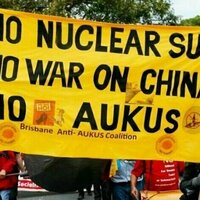
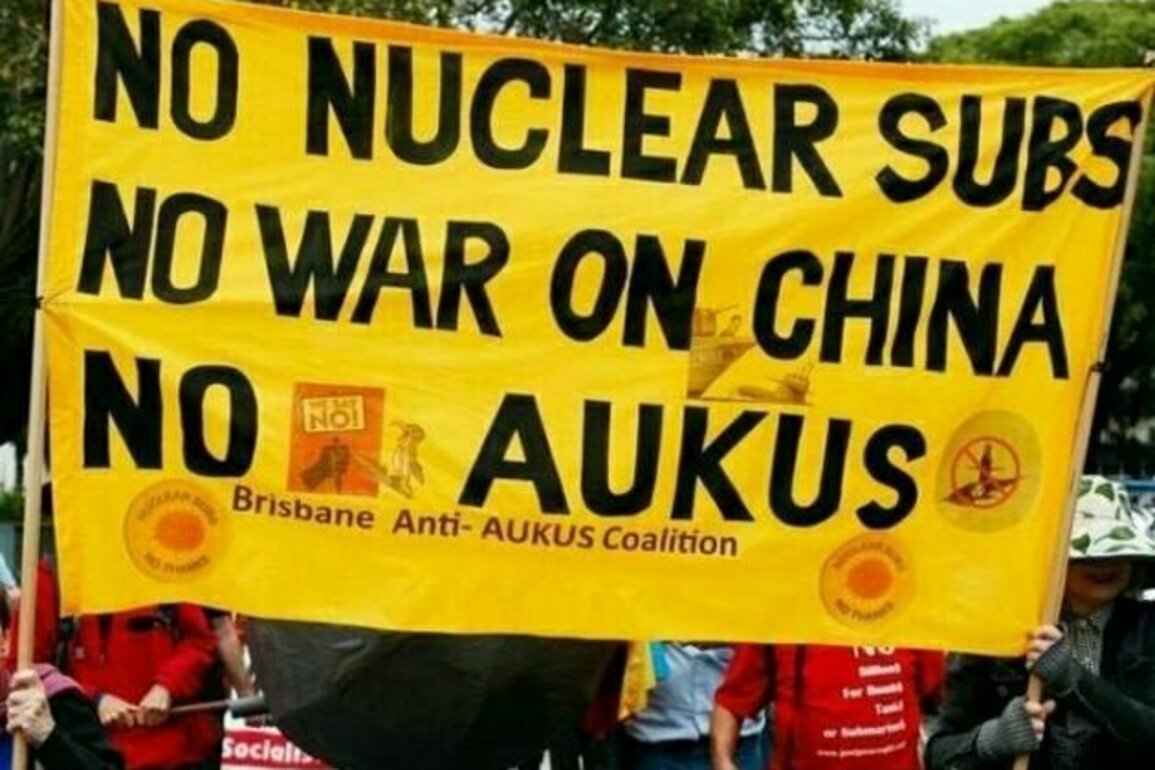
This is a campaign in which the people of each country on the Pacific Rim, including Australia, can say no to such a war and no to an increase in military spending for it, through a common petition which is a call on their governments.
The common petition can be accessedhereat the World Beyond War website.
This call on governments reads:
Later this year, the petitions will be presented to their respective governments by peace activists in each country.
Bevan Ramsdenis an ex-telecommunications engineer and a long-time peace activist who advocates for Australias independence. He was a member of the coordinating committee of the Independent and Peaceful Australia Network (IPAN) for a number of years and is the editor of its monthly publication, 'Voice'.
Related Articles
- Seeking cooperation with China does not make one a useful idiot
- Fool's gold: China beguiles the South Pacific
- Navy exercise sees anti-China hysteria grow Down Under
- America plays catch-up with China in South Pacific
- U.S. aggression against China ignores lessons of Hiroshima